Cold weather and resin don't get along. When temperatures drop, epoxy resin gets thicker, bubbles have a harder time escaping, and your project may take longer to cure. Sudden temperature changes can also leave you with an uneven finish.
Fortunately, you can keep creating all winter long with a few simple adjustments.
In this blog, we'll share how to prep your resin, keep your workspace warm, and help your projects cure properly when the weather turns cold.
Watch the video tutorial:
What's The Best Temperature For Curing Resin?
ArtResin works best when your resin, workspace, and project are kept between 75-85°F (24-30°C). This helps the resin flow smoothly, release bubbles more easily, and cure properly.
Here's a quick temperature guide to keep handy:
| Temperature | What To Know |
| 75-85°F (24-30°C) | Ideal for working with ArtResin and curing your project. |
| Below 75°F (24°C) | Resin gets thicker and harder to work with, and curing may take longer. |
| During the first 24 hours | Keep the temperature warm and consistent to help prevent surface imperfections. |
💡 The Takeaway: Keep your resin at room temperature or slightly warmer before you start, and make sure your workspace stays warm while your project cures.
How Does Cold Weather Affect Resin?
Ever tried pouring cold honey? It moves much more slowly than honey at room temperature. Resin behaves in a similar way.
When ArtResin gets cold, it becomes thick and hard to mix, pour, spread, and self-level. Its thicker consistency also makes it harder for air bubbles to escape, which can leave your resin looking cold or frothy. These tiny micro bubbles trapped beneath the surface cannot be simply torched away.
Cold temperatures also slow the curing process. And if the temperature drops while your piece is curing, you can end up with dimples, waves, or an uneven surface.
Fortunately, these problems are all avoidable. A few simple steps can help you avoid these problems. Let's take a closer look.
1. Bring Your Resin to Room Temperature
Before you measure and mix, make sure both your resin and hardener are at least at room temperature. If they've just been delivered or they've been stored in a cold room, garage, or basement, give them time to warm up before you begin.
How can you tell if your resin is too cold?
Cold resin can look cloudy or milky and has a thick, taffy like consistency, making it difficult to pour, mix, and spread.

Cold resin will have a cloudy appearance from thousands of trapped micro bubbles (that you'll never be able to torch out).

Cold resin is thick and difficult to spread.

It will not self-level as easily as room temperature resin and has a frothy looking appearance.

Even after torching, you will be left with frothy looking areas below the resin surface.

How Can I Warm Up Cold Resin?
The easiest option is to bring your bottles into a warm room and let them reach room temperature naturally. If you're in a hurry, a warm water bath can help.
Here's how to do it:
-
Warm the bottles before measuring and mixing. Never warm resin after the two parts have been combined or the mixture will heat up and cure instantly.
-
Fill a container with warm, not hot water. Think comfortably warm bathwater, not boiling water.
-
Place the tightly capped bottles in the water. Don't submerge them, and make sure water can't get inside.
-
Let them sit for about 10-15 minutes. Larger bottles or very cold resin may need a little longer.
- Dry the bottles thoroughly before opening them. Even a small amount of water getting into your resin can affect the final result.


Once your resin is up to temperature, it should be clear and have a smooth, honey-like consistency that's much easier to work with.

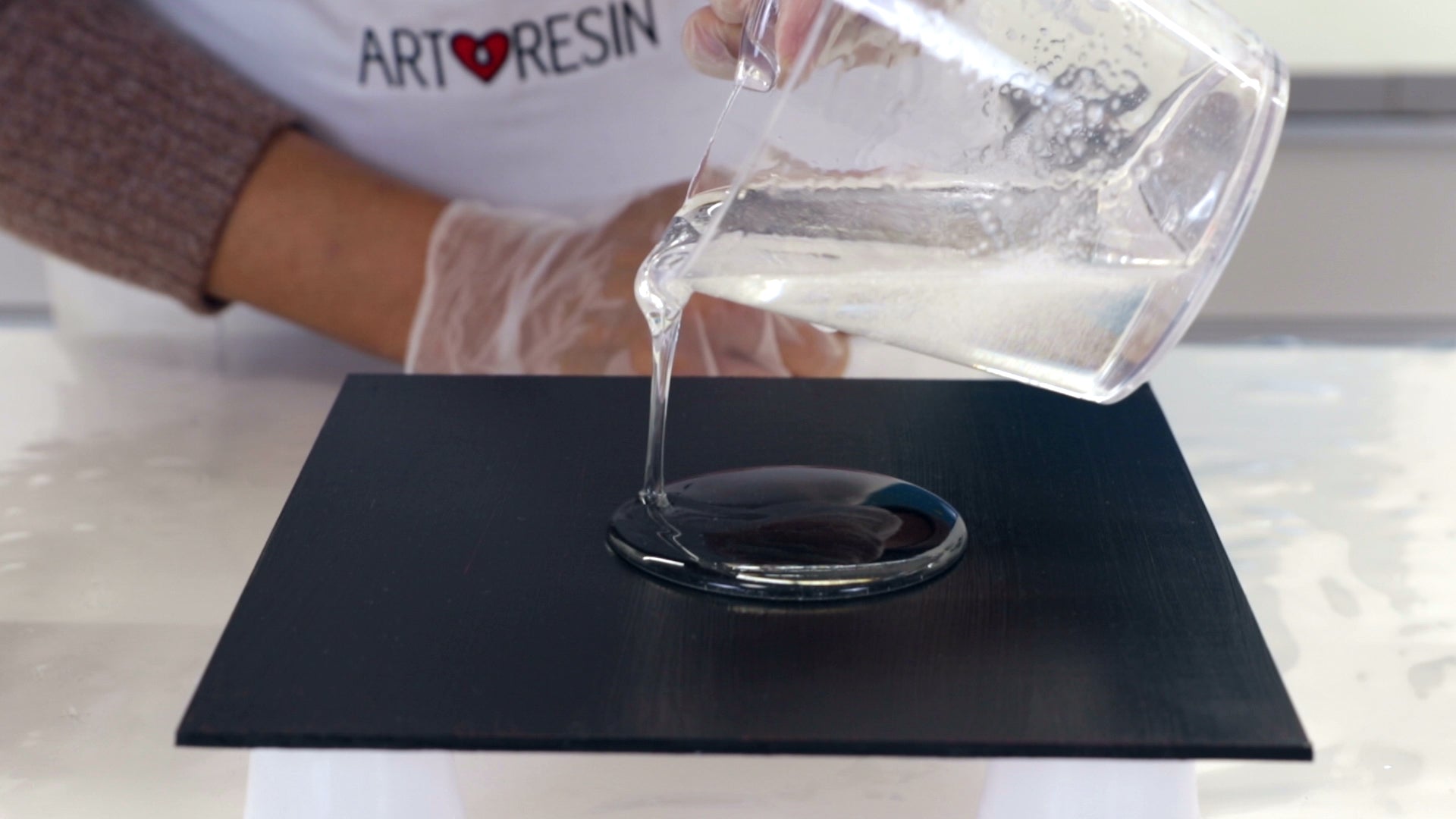
💡TIP: Warm resin cures faster. This means you'll have less time to work with it. ArtResin's usual 40 minute working time will be shortened by about 10 minutes, so have your artwork and supplies ready before you start.
Don't leave warm resin sitting in the mixing cup! Warmed resin sitting in a large volume can heat up quickly, possibly curing right in the cup. Pour promptly rather than leaving the mixture waiting.
2. Keep Your Workspace Warm & Dry
Warming your resin is only half the job. Your workspace and the surface you're resining needs to be at a suitable temperature, too.
Here are 3 things to keep in mind:
- WARM: Aim for 75-85°F (24-30°C).
- DRY: 50% humidity is ideal. Anything below 60% relative humidity is acceptable.
- STABLE: Keep the temperature consistent for the first 24hrs
During the cold winter months, try to plan ahead. A space heater can raise the room temperature. Just be sure to follow the heater's safety instructions and keep it at a safe distance from your resin and artwork.
💡 TIP: For small projects, you can build your own Resin Hot Box to maintain a warm, consistent environment around your piece.
3. Keep The Temperature Consistent While Your Resin Cures
The first 24 hours are especially important. Keep your project in a warm, dry space where the temperature won't fluctuate significantly.
Here's a mistake that easy to make: you get your workspace nice and warm, pour your resin, and leave it a sunny windowsill to cure. It might seem like the perfect spot, but when night falls, the temperature does too. These temperature swings can lead to dimples, waves and other strange surface imperfections, sometimes called the "orange peel" effect.
This piece was resined in winter and let to cure in a sunny window. When the sun went down, the temperature dropped and the piece cured with dimples and other imperfections.

See What Happens When Resin Gets Too Cold:
We tested several boards coated in ArtResin in November, at the start of a Canadian winter, to see what happened when they were exposed to cold temperatures during curing.
Board 1: Cured in a cold garage.
This board was left to cure in a cold garage, below 75°F (22°C). 24 hours later, it was still sticky and hadn't cured at all. 
Board 2A: Moved to the cold garage after 2 hours
This board cured in the warm ArtResin studio at 75°F/24°C for 2 hours before being moved to the garage where daytime temperatures were just above freezing and nighttime temperatures dropped below freezing. By morning, it was dry to the touch but covered in dimples, ripples and other surface imperfections.
Board 2B: Moved to the cold garage after 5 hours
This board spent about 5 hours curing in the warm studio before being moved to the cold garage. It also cured with surface imperfections.
Board 2C: Moved to the cold garage after 8 hours
This board spent 8 hours in the warm studio before being moved to the garage overnight. It’s in better shape than the first two boards, but there are still noticeable imperfections.

Temperature drops during curing can affect the surface, even after several hours in a warm room. For the best results, keep your project in a warm, stable environment for the first 24 hours.
Can surface imperfections be fixed? Depending on the problem, you may be able to apply another coat. Check out our blog post, How To Apply A Second Coat, to learn how.
Board 3: Cured in the warm studio for 24 hours
For comparison, here's a board that used resin warmed in a water bath, and was poured and cured in the warm studio. After 24 hours, it cured without the surface imperfections seen on the boards exposed to the cold.

What If Your Resin Is Still Sticky?
If your resin is still tacky after 24 hours, cold temperatures may be part of the problem.
Move your project to a warm, stable environment and give it another 24 hours. Under suitable conditions, ArtResin is typically dry to the touch after about 24 hours and fully cured in 72 hours.
If your resin remains sticky, temperature may not be the issue. A measuring or mixing issue is likely the cause.
💡 TIP: Check out our blog How to Fix Sticky Resin for help figuring out what went wrong and what to do next.
Frequently Asked Questions
Can I use ArtResin in a cold room?
For best results, keep your resin and workspace between 75-85°F (24-30°). If your room is too cold, the resin may be harder to work with and take longer to cure. Warm the space before you begin and keep the temperature consistent during the early curing period.
Can I warm resin in a water bath?
Yes! A water bath is a great way to bring cold resin and hardener up to temperature. Keep the bottles tightly capped, use warm rather than hot water, and dry them thoroughly before opening. Remember that warming resin shortens its working time.
Why does cold resin look cloudy?
Cold resin becomes thicker, making it harder for tiny air bubbles to escape. These trapped bubbles can give the resin a cloudy or frothy appearance. Letting the resin return to room temperature (or slightly above) before mixing will help.
What temperature should I store ArtResin at?
Store your opened or unopened bottles in a stable, room-temperature location, out of direct sunlight. If the bottles get cold, allow them to return to room temperature before use.
Keep Creating, Even When It's Cold!
Cold weather doesn't have to put your resin projects on hold. A little preparation goes a long way toward helping your resin flow smoothly and giving your finished piece the clear, glossy surface you're after.
Before you get started working with resin in cold temperatures, make sure you've got these 3 things covered:
- Warm resin: Let your resin and hardener reach room temperature before mixing.
- A warm workspace: Aim for 75-85°F (24-30°C).
- A steady temperature: Keep your project in a warm, stable environment for the first 24 hours.
Want to learn more about ArtResin? Check out our helpful guides below:
- How to Build a Resin Hot Box for Cold Weather Curing
- How Does Hot Weather Affect Resin?
- How Does Moisture Affect Epoxy Resin?
ArtResin: The Original Epoxy For Resin Art.